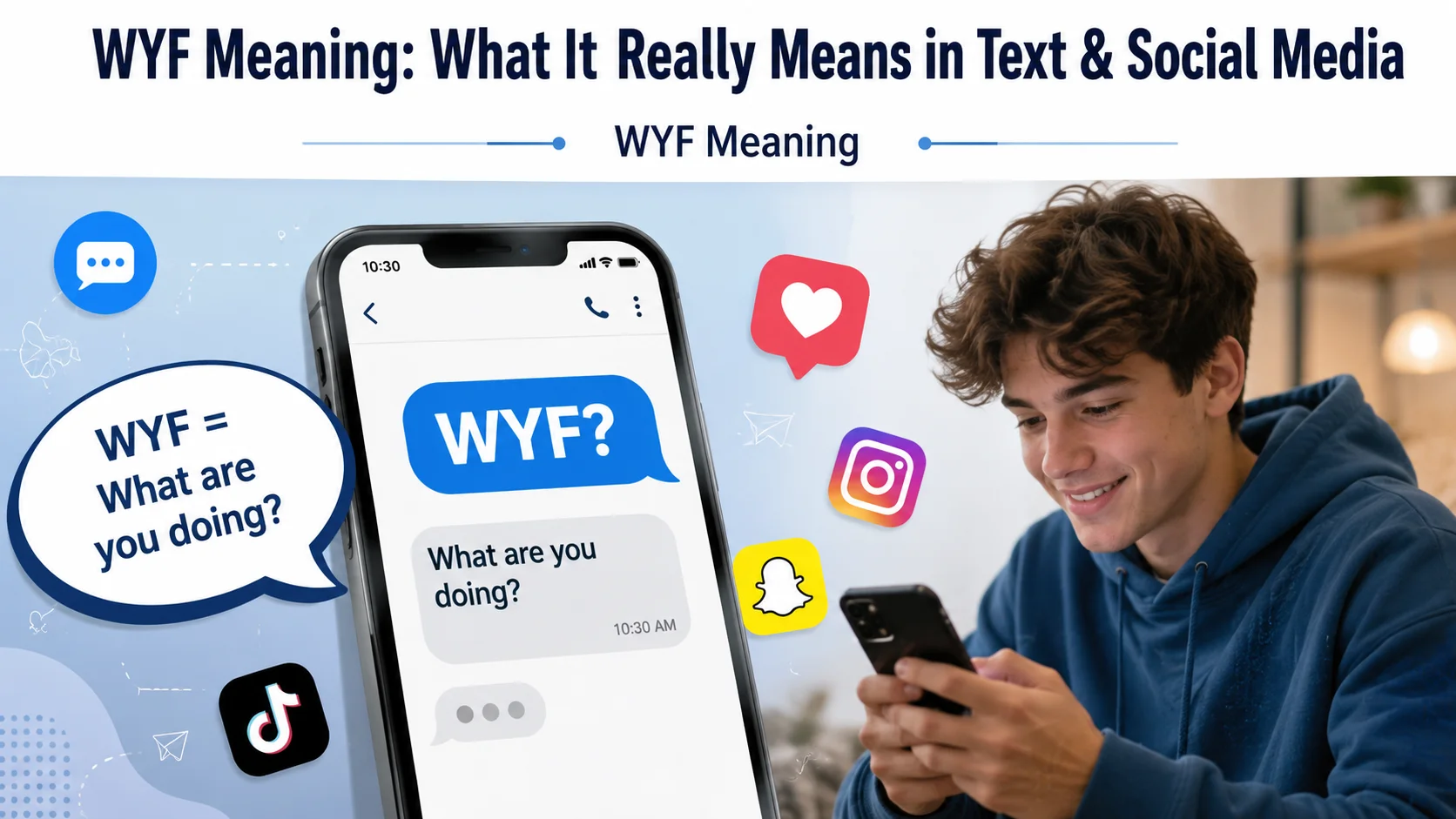
People see short slang terms online every day. However, some abbreviations can feel confusing at first glance. One of those is “WYF.” It often appears in text messages, Snapchat chats, TikTok comments, and direct messages across social media.
The WYF meaning has grown popular because digital communication moves fast. People shorten words to save time, sound casual, or match online culture. In the United States, especially among younger users, WYF became part of modern texting language during the rise of mobile messaging and social apps.
Today, WYF can carry different tones depending on the conversation. Sometimes it sounds friendly. Other times it may feel flirty, casual, or even confusing. Because of that, understanding context matters more than the letters themselves.
Quick Answer
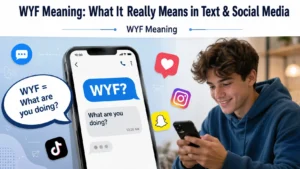
WYF meaning usually stands for “Where You From?” in American texting and social media culture. It’s commonly used as a casual conversation starter online, especially in chats, dating apps, gaming communities, and social platforms. In some situations, people may also use WYF with different slang meanings depending on tone and context.
TL;DR
• WYF usually means “Where You From?”
• It’s popular in American texting culture.
• The phrase often starts casual online conversations.
• Tone changes depending on platform and relationship.
• WYF appears often on Snapchat, TikTok, and dating apps.
• Context matters because slang meanings can shift.
What Does WYF Mean in Texting?
The Most Common Meaning
In most American online conversations, WYF means “Where You From?” People use it when meeting someone online or starting a casual chat. The phrase helps begin a conversation without sounding too formal.
For example, someone on Snapchat may send:
“Hey, WYF?”
In that context, they simply want to know your hometown, state, or country.
Why People Shorten It
Text slang became popular because mobile communication rewards speed. Short forms save typing time and create a relaxed tone. WYF fits perfectly into that style because it feels quick and conversational.
Today, abbreviations also help users sound more socially connected online. Many people use slang naturally to match internet culture.
Common Places You’ll See WYF
• Snapchat private chats
• TikTok comment sections
• Instagram direct messages
• Online gaming conversations
• Dating app introductions
• Group text conversations
The History of Internet Slang and WYF
Early Text Messaging Culture
WYF belongs to a larger tradition of internet shorthand. During the late 1990s and early 2000s, texting plans often limited message length. Because of that, users shortened phrases whenever possible.
Terms like “LOL,” “BRB,” and “TTYL” became cultural symbols of early digital communication. WYF later joined that same style of online speech.
The Rise of Social Media Language
As smartphones became common in America, internet slang changed quickly. Platforms like Snapchat and TikTok encouraged faster, more casual communication. Short phrases became part of personal identity and online expression.
WYF spread because it worked well in quick introductions. It also sounded more relaxed than asking, “Where are you from?”
How Slang Evolves
Internet slang constantly changes meaning over time. Some phrases disappear completely. Others survive because younger generations continue using them in new ways.
WYF stayed relevant because location and identity remain important parts of online interaction.
WYF Meaning on Snapchat
Why Snapchat Popularized WYF
Snapchat helped make casual slang mainstream among younger Americans. Since messages disappear quickly, conversations often feel spontaneous and informal.
WYF became common because users frequently meet new people through stories, mutual friends, or quick-add features.
Emotional Tone on Snapchat
The phrase can sound different depending on context.
• Friendly and curious
• Flirty and playful
• Casual and low-pressure
• Social and conversational
• Sometimes suspicious or cautious
For example, a stranger asking “WYF?” might feel normal on Snapchat. However, tone changes based on familiarity and comfort.
Snapchat Culture and Identity
On Snapchat, people often build identity through location, style, and social circles. Asking where someone is from helps establish connection quickly.
In American youth culture, location can signal personality, music taste, sports loyalty, or lifestyle.
WYF Meaning on TikTok and Social Media
WYF as Digital Conversation Culture
TikTok comments move extremely fast. Because of that, short slang terms dominate conversations. WYF appears in livestream chats, comment threads, and creator interactions.
Sometimes people use it seriously. Other times it becomes part of jokes or memes.
Modern Social Media Associations
| Context | Meaning in the USA | Common Associations | Notes |
| Snapchat Chat | Where You From? | Flirting, introductions | Usually casual |
| TikTok Comments | Asking location or identity | Meme culture | Often playful |
| Gaming Chats | Social introduction | Team bonding | Informal tone |
| Dating Apps | Starting conversation | Romantic interest | Common opener |
| Instagram DMs | Casual curiosity | Networking or attraction | Tone varies |
Why Short Slang Feels Natural Online
Modern social apps reward quick reactions. Long messages often feel formal or overly serious. Instead, abbreviations create a relaxed atmosphere.
That’s why WYF continues appearing across American internet culture.
WYF Meaning in Dating and Flirting
A Common Conversation Starter
Many people first encounter WYF on dating apps. In romantic conversations, it usually works as an easy opener.
Instead of asking many questions immediately, users keep things simple.
The Psychology Behind It
Asking where someone is from creates familiarity. It helps people find shared experiences, cities, or cultural references.
That small connection can reduce social tension during online conversations.
Flirty or Friendly?
Tone matters heavily online.
• Friendly between new online friends
• Flirty in dating app conversations
• Curious in gaming communities
• Casual in social group chats
• Sometimes awkward if overly repeated
Because tone lacks facial expressions, interpretation depends on context.
Why Americans Use So Much Text Slang
Fast Communication Culture
American digital culture values speed and convenience. Text slang reflects that mindset. People often communicate while multitasking, scrolling, or watching videos.
Short forms like WYF feel efficient and socially familiar.
Group Identity and Belonging
Slang also creates community. Using modern abbreviations can signal cultural awareness and online participation.
Younger users especially treat slang as part of digital identity.
Social Media Shapes Language
Unlike older generations, modern users grow up inside internet spaces. Because of that, online slang influences everyday speech more than ever before.
Today, some people even say abbreviations aloud in conversation.
Emotional and Psychological Meaning of WYF
What WYF Signals Emotionally
Even simple slang carries emotional meaning. WYF often signals openness and curiosity. It suggests someone wants connection without sounding too intense.
That emotional balance makes it popular.
Common Psychological Associations
• Casual friendliness
• Social confidence
• Digital curiosity
• Relaxed communication style
• Low-pressure interaction
Why Informal Language Feels Comfortable
Short slang removes some emotional weight from conversations. Formal questions can feel stiff online. However, abbreviations feel lighter and easier to answer.
That’s especially important in fast-moving social spaces.
Also Read This: What Does GNG Mean in Texting?
Different Meanings of WYF
Alternative Interpretations
Although “Where You From?” is most common, slang changes across communities. Some users interpret WYF differently depending on context.
Possible meanings include:
• “What’s Your Favorite?”
• “What You Feeling?”
• “Who’s Your Friend?”
• Joke or meme variations
However, these are less common in mainstream American texting.
Context Always Matters
The surrounding conversation usually reveals the intended meaning. For example:
“WYF? I’m from Texas.”
That clearly points to “Where You From?”
Meanwhile:
“WYF about the new song?”
Could mean “What You Feeling?”
WYF and Online Identity
Digital Identity in America
Modern Americans often express identity online through slang, aesthetics, and communication style. WYF plays a small role in that culture because it helps people establish background and belonging.
Location still matters socially online.
Regional Pride and Social Connection
Americans frequently identify strongly with cities or states. Asking where someone is from can lead to conversations about:
• Sports teams
• Regional accents
• Music scenes
• Food culture
• Lifestyle differences
• Shared experiences
That makes WYF more socially meaningful than it first appears.
Is WYF Ever Considered Rude?
Why Tone Can Change Everything
Most people see WYF as harmless. However, tone and timing matter. If someone repeatedly asks personal questions, users may feel uncomfortable.
Online safety awareness has also increased in recent years.
Situations Where WYF May Feel Strange
• Random messages from strangers
• Aggressive flirting attempts
• Spam-like conversations
• Overly personal questioning
• Fake account interactions
Because of that, context shapes emotional reactions.
Respecting Boundaries Online
Today, many users avoid sharing exact locations online. Instead, they may answer broadly, such as naming a state instead of a city.
That shift reflects modern privacy concerns in digital culture.
How WYF Reflects Changing Language
Language Evolves Constantly
Internet slang changes faster than traditional language. Words can rise, fade, and return within a few years.
WYF survived because it serves a practical social purpose.
From Texting to Everyday Speech
Some slang terms remain online only. Others enter spoken conversation. Younger Americans occasionally say phrases like “DM me” or “IRL” aloud.
WYF hasn’t fully crossed into spoken language yet, but digital slang increasingly shapes everyday communication.
The Future of Online Slang
New apps will likely create new abbreviations. However, quick social phrases probably won’t disappear anytime soon.
Digital communication now influences culture worldwide.
Cross-Cultural Meanings of Informal Slang
Slang Beyond America
Many countries use internet shorthand differently. However, American social media strongly influences global online language.
As a result, slang like WYF appears internationally, even among non-native English speakers.
Cultural Differences in Interpretation
Some cultures prefer more formal introductions. Others embrace casual online interaction quickly.
Because of that, WYF may feel friendly in one setting but overly direct in another.
Shared Internet Culture
Despite cultural differences, social media creates shared communication habits across countries. Slang becomes part of a global digital language.
WYF in Memes and Pop Culture
Meme Humor and Slang
Internet humor often exaggerates texting culture. WYF appears in memes about awkward flirting, dry conversations, or random DMs.
That keeps the abbreviation culturally recognizable.
Social Media Trends
Trending slang spreads rapidly through:
• TikTok videos
• Meme pages
• Influencer content
• Livestream chats
• Viral screenshots
• Reaction videos
Because of this cycle, even older slang terms can return suddenly.
FAQs
What does WYF mean in texting?
WYF usually means “Where You From?” in texting and online chats. Americans commonly use it during casual introductions on social media or dating apps.
Is WYF flirty?
Sometimes. WYF can sound flirty when used in dating conversations or direct messages. However, many people also use it casually with friends or strangers online.
What does WYF mean on Snapchat?
On Snapchat, WYF usually asks where someone lives or comes from. It’s often part of quick, informal conversations between users.
Can WYF have multiple meanings?
Yes. Although “Where You From?” is most common, some people use WYF differently depending on context and online community.
Is WYF rude?
Usually not. However, repeated questions from strangers may feel uncomfortable. Tone, timing, and context all matter online.
Why do people use abbreviations like WYF?
People use abbreviations because they’re fast, casual, and socially familiar online. Short slang also matches modern texting culture.
Conclusion
Digital slang changes constantly, yet some abbreviations stay popular because they serve simple social needs. The WYF meaning remains relevant because people still want quick, easy ways to start conversations online.
In American internet culture, WYF usually means “Where You From?” However, its emotional tone changes depending on the platform, relationship, and context. Sometimes it feels friendly. Other times it sounds playful or flirtatious.
As online communication keeps evolving, slang terms like WYF reveal something larger about modern culture. They show how people build identity, connection, and community through just a few letters on a screen.