The evil eye is one of the world’s oldest and most recognized symbols. Today, people wear it on necklaces, bracelets, tattoos, and even phone cases. In the United States, the symbol has become both a fashion trend and a spiritual sign connected to protection, energy, and personal boundaries.
Many people ask what the symbol truly means. Some see it as a shield against jealousy or bad intentions. Others view it as a cultural tradition passed through generations. Because of social media and global fashion, the symbol now appears everywhere from luxury jewelry to home decor.
At the same time, the evil eye carries deep historical roots. Its meaning stretches back thousands of years across the Mediterranean, Middle East, South Asia, and beyond. Understanding its background helps explain why it still matters today.
Quick Answer
What Does the Evil Eye Mean? The evil eye usually symbolizes protection against envy, negative energy, and harmful intentions. In the USA, it’s commonly worn as a spiritual or fashionable symbol meant to bring safety, balance, and emotional peace.
TL;DR
• The evil eye symbolizes protection from jealousy and negative energy.
• Its roots trace back thousands of years to ancient civilizations.
• Blue evil eye charms are the most common modern version.
• Americans often wear it as jewelry or spiritual decor.
• Different cultures interpret the symbol in unique ways.
• Today, it blends tradition, spirituality, and modern fashion.
What Is the Evil Eye Symbol?
The evil eye is both a symbol and a belief. The idea centers around the belief that envy or intense jealousy can spiritually harm another person. Because of this, protective symbols developed across many cultures.
What the Symbol Looks Like
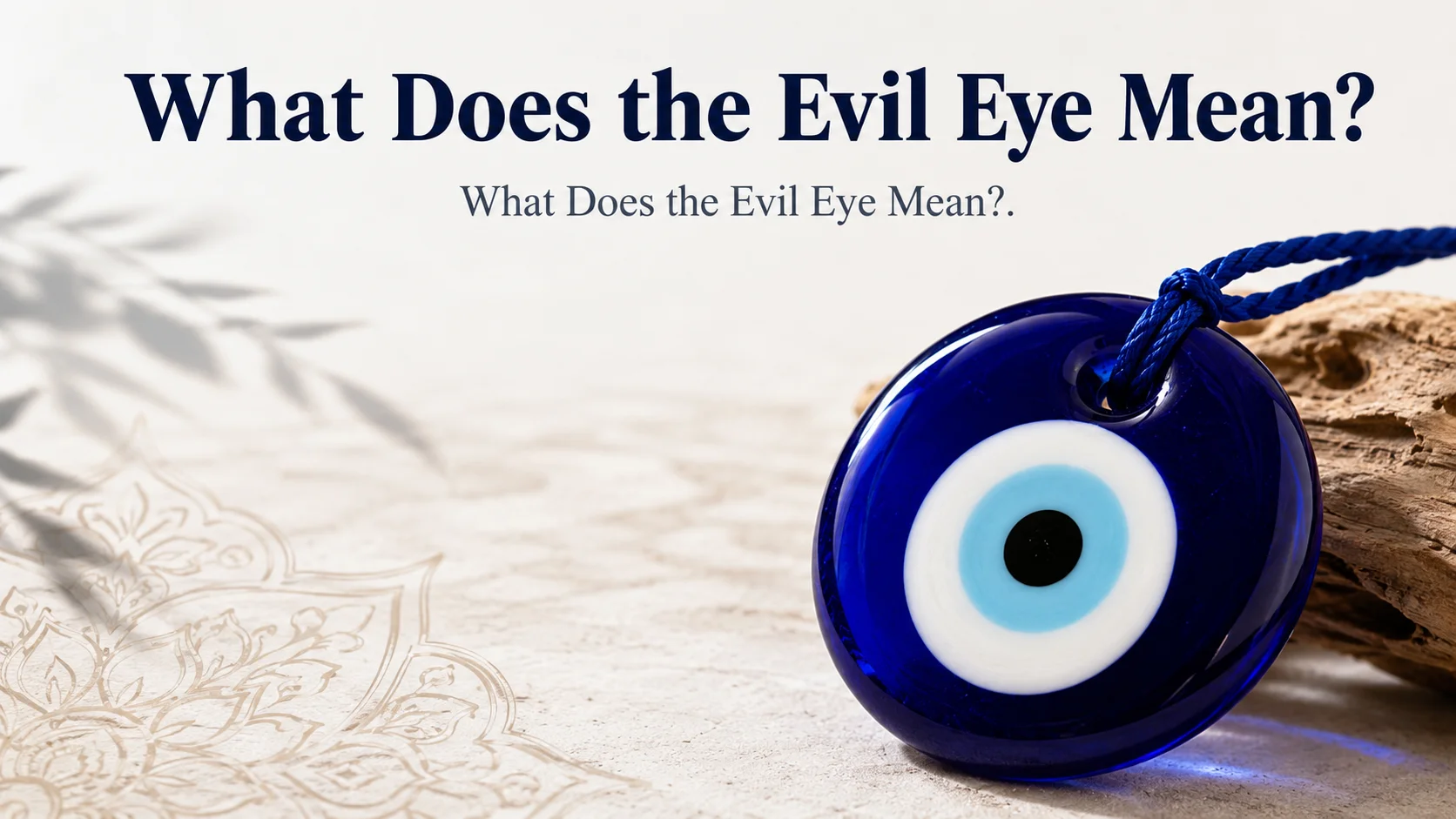
The most common evil eye design resembles an eye-shaped circle. It usually contains several layers of color.
Common design features include:
• Deep blue outer ring
• White and light blue inner circles
• Dark center resembling a pupil
• Circular or teardrop-shaped patterns
• Glass, ceramic, or metal materials
• Jewelry, wall hangings, or charms
Today, the blue eye design is the version most Americans recognize. However, older forms varied greatly by region and religion.
Why the Eye Shape Matters
Eyes often symbolize awareness, truth, and observation. In many traditions, the eye shape acts like a spiritual mirror. Instead of absorbing negativity, it reflects it away from the wearer.
Because of this, many people place evil eye symbols near doors, windows, or personal belongings.
The Ancient Origins of the Evil Eye
The evil eye belief is far older than modern fashion trends. Historians trace versions of the idea back over 5,000 years.
Ancient Mediterranean Beliefs
Ancient Greeks and Romans strongly believed envy carried dangerous power. They thought certain looks or stares could cause illness, misfortune, or bad luck.
Writers from classical Greece described harmful “envious gazes” in literature and philosophy. Similar beliefs later appeared throughout the Roman Empire.
Middle Eastern and Asian Roots
The belief also spread across:
• Ancient Mesopotamia
• Egypt
• Persia
• Turkey
• Jewish traditions
• Arab cultures
• South Asian communities
Over time, each culture developed protective rituals, charms, and prayers against the evil eye.
Pre-Christian Symbolism
Before Christianity spread through Europe, many ancient societies already believed spiritual forces could affect daily life. Protective amulets were common in homes, markets, and temples.
In contrast to modern interpretations, older traditions treated the evil eye very seriously. It wasn’t simply decorative.
What Does the Evil Eye Symbolize Today?
Modern meanings blend ancient tradition with contemporary spirituality. In the USA especially, the symbol often represents emotional protection and personal energy.
Protection From Negativity
The most common meaning remains protection. Many believe the symbol helps guard against:
• Jealousy
• Gossip
• Ill intentions
• Emotional negativity
• Spiritual imbalance
• Toxic environments
Even people without religious beliefs may wear the symbol for comfort or emotional reassurance.
Awareness and Intuition
Some people connect the evil eye with intuition and mindfulness. The eye shape can symbolize staying alert to harmful behavior or emotional manipulation.
As a result, the symbol sometimes appears in wellness spaces and meditation practices.
Good Luck and Balance
Although its origins involve fear of envy, modern interpretations often focus more on positivity. Many Americans now see it as a sign of luck, calmness, and emotional balance.
Evil Eye Meaning in American Culture
In the United States, the evil eye has evolved into a mix of cultural tradition, spiritual symbolism, and fashion.
How Americans Commonly Use It
The symbol became especially popular during the 2010s and 2020s. Celebrities, influencers, and jewelry brands helped spread its visibility.
Today, Americans use it in:
• Necklaces and bracelets
• Home decor
• Car charms
• Phone accessories
• Tattoos
• Yoga and wellness spaces
Many users appreciate the symbol without fully practicing its traditional beliefs.
Also Read This: 30 Other Ways to Say “Have a Great Weekend” (With Examples)
The Influence of Social Media
Platforms like Instagram and TikTok helped normalize spiritual symbols in everyday fashion. The evil eye often appears beside crystals, zodiac signs, and moon imagery.
However, this popularity also created confusion. Some people treat the symbol purely as an aesthetic trend while others consider it deeply cultural or spiritual.
Meaning Across Different Communities
For many immigrant families in America, the evil eye remains a living tradition connected to heritage and family customs.
Communities with strong historical connections include:
• Turkish Americans
• Greek Americans
• Arab Americans
• Persian Americans
• Jewish communities
• South Asian Americans
For these groups, the symbol may carry emotional and ancestral importance.
Evil Eye Colors and Their Meanings
Different colors often carry different symbolic meanings. While interpretations vary, certain themes appear repeatedly.
Common Evil Eye Color Meanings
| Color | Meaning in the USA | Common Associations | Notes |
| Blue | Protection and calmness | Safety, peace, trust | Most traditional version |
| Red | Strength and courage | Passion, confidence | Often linked to energy |
| Green | Growth and healing | Nature, balance | Popular in wellness culture |
| Black | Power and protection | Strength, mystery | Sometimes misunderstood |
| White | Purity and focus | Clarity, simplicity | Common in modern decor |
Why Blue Became Dominant
Blue became associated with protection partly because ancient cultures linked it to the sky and divine energy. Some traditions also believed blue eyes were rare and powerful.
Today, the blue version remains the most recognized worldwide.
Spiritual Meaning of the Evil Eye
Many people connect the evil eye to spirituality rather than organized religion.
Energy and Emotional Boundaries
Modern spiritual interpretations often focus on emotional protection. The symbol may represent guarding personal energy from draining relationships or stressful environments.
Because of this, it’s common in wellness communities.
Manifestation and Mindfulness
Some people combine the evil eye with practices like:
• Meditation
• Journaling
• Manifestation rituals
• Crystal healing
• Yoga
• Breathwork
However, beliefs differ widely. Not everyone who wears the symbol follows spiritual practices.
Religious Connections
The evil eye appears in several religious traditions, including Islam, Judaism, Christianity, and Hindu cultures. Still, interpretations vary greatly.
Most traditions focus less on magic and more on protection, prayer, and humility.
Psychological Meaning of the Evil Eye
The symbol also has emotional and psychological meaning. Humans naturally react strongly to eye imagery.
Why Eye Symbols Feel Powerful
Psychologists often note that eyes create feelings of awareness and observation. Humans instinctively notice eye contact and facial expressions.
Because of this, eye-shaped symbols can feel emotionally intense.
Emotional Associations
The evil eye often represents:
• Emotional safety
• Self-awareness
• Protection from judgment
• Fear of envy
• Confidence and resilience
• Personal boundaries
In modern American life, these themes strongly connect with mental wellness conversations.
Evil Eye Jewelry and Fashion Trends
Fashion helped turn the evil eye into a mainstream American symbol.
Popular Jewelry Styles
Common evil eye fashion items include:
• Gold necklaces
• Beaded bracelets
• Hoop earrings
• Anklets
• Layered pendants
• Minimalist rings
Luxury and fast-fashion brands alike use the symbol frequently.
Tattoos and Personal Identity
Evil eye tattoos have become especially popular among younger adults. Many choose them for symbolic protection or emotional healing.
Tattoo placements often include:
• Wrist
• Shoulder
• Neck
• Ankle
• Back
• Finger
For some people, the tattoo marks survival after difficult experiences.
Evil Eye Decor and Home Symbolism
The symbol also appears widely in homes and interior design.
Where People Place Evil Eye Charms
Many place evil eye decor near entrances or shared spaces.
Common locations include:
• Front doors
• Living rooms
• Bedrooms
• Cars
• Offices
• Nurseries
Traditionally, placement near entrances symbolized guarding the household.
Modern Interior Design
In the USA, evil eye decor often blends with bohemian or Mediterranean-inspired styles. Designers frequently use blue glass charms as decorative accents.
However, some families still treat these objects as spiritually meaningful rather than purely decorative.
Misunderstandings and Controversies
The evil eye sometimes causes confusion because beliefs differ across cultures.
Is the Evil Eye Good or Bad?
One major misunderstanding involves the phrase itself. The “evil eye” can refer both to the harmful curse and the protective symbol against it.
That dual meaning confuses many Americans encountering the symbol for the first time.
Cultural Appropriation Concerns
As the symbol grew popular in fashion, some people worried traditional meanings were being ignored or commercialized.
Critics sometimes argue that mass-market trends remove cultural depth from sacred symbols. Others believe cultural sharing increases awareness and appreciation.
Religious Concerns
Some religious individuals avoid the symbol because they associate it with superstition. Others comfortably combine it with prayer or faith traditions.
Views differ widely even within the same religion.
How the Meaning Changed Over Time
The evil eye has changed dramatically across history.
Ancient Fear Versus Modern Symbolism
Ancient societies often feared the evil eye intensely. People blamed it for illness, crop failure, or personal tragedy.
Today, Americans usually interpret the symbol more positively and symbolically.
From Folk Tradition to Pop Culture
The symbol moved through several stages:
• Ancient spiritual protection
• Family folk tradition
• Religious adaptation
• Tourist souvenir culture
• Fashion accessory
• Social media trend
Because of this evolution, modern meanings often combine old and new ideas.
Evil Eye in Pop Culture and Media
Modern entertainment helped spread awareness of the symbol across America.
Celebrity and Influencer Influence
Celebrities and influencers frequently wear evil eye jewelry online. As a result, younger audiences often encounter the symbol through fashion before learning its history.
Music, Art, and Branding
The symbol appears in:
• Album art
• Clothing graphics
• Lifestyle branding
• Festival fashion
• Digital stickers
• Smartphone wallpapers
Its bold visual design makes it highly recognizable.
Why the Evil Eye Still Resonates Today
The symbol remains powerful because it speaks to universal emotions. Most people understand feelings like envy, judgment, and emotional stress.
A Symbol of Modern Protection
Today’s world feels highly visible and connected. Social media increases comparison and public attention.
Because of this, many people relate to symbols promising emotional protection or balance.
Tradition Meets Modern Identity
The evil eye also bridges old traditions with modern self-expression. Some wear it for spiritual reasons. Others value its connection to family heritage or personal healing.
Its flexibility helps explain its lasting popularity.
FAQs
Is the evil eye symbol religious?
Not necessarily. The evil eye appears across many religions and cultures, but it’s also widely used outside organized religion. Many Americans wear it as a cultural or personal symbol.
What does a blue evil eye mean?
A blue evil eye usually symbolizes protection, calmness, and emotional safety. It’s the most traditional and recognizable version.
Is wearing the evil eye bad luck?
Most traditions view the protective symbol as helpful rather than harmful. However, beliefs vary depending on culture and religion.
Why do people hang evil eyes in their homes?
People often place evil eye charms near entrances for protection. Traditionally, they were believed to block harmful energy or envy.
What’s the difference between the evil eye and the curse?
The phrase can describe both the harmful curse and the protective charm against it. Context usually explains which meaning people intend.
Can anyone wear the evil eye symbol?
Many people around the world wear the symbol today. However, it’s respectful to understand its cultural roots and historical meaning.
Conclusion
The evil eye remains one of the world’s most enduring symbols. Although its roots are ancient, its meaning continues evolving in modern American culture. Today, many people see it as a sign of protection, awareness, balance, and emotional strength.
For some, the symbol connects them to family traditions or spiritual beliefs. For others, it simply offers comfort in a fast-moving world filled with comparison and stress. Either way, the lasting appeal of the evil eye shows how ancient symbols still shape modern identity and emotion.
Understanding What Does the Evil Eye Mean? helps reveal more than a trend. It reveals how people across generations have searched for protection, meaning, and peace in everyday life.