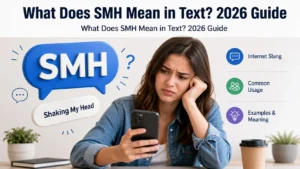
You’ve probably seen “SMH” pop up in texts, tweets, or comments. It’s short, simple, and often loaded with emotion. But what does it really mean—and why has it become so common in everyday communication?
What Does SMH Mean in a Text: A Complete Guide (2026 Update) explores more than just a definition. It looks at how this tiny phrase carries tone, attitude, and even cultural meaning—especially in the United States. From casual chats to viral posts, SMH reflects how people react to the world in real time.
Today, understanding SMH isn’t just about slang. It’s about reading emotion without hearing a voice.
Quick Answer
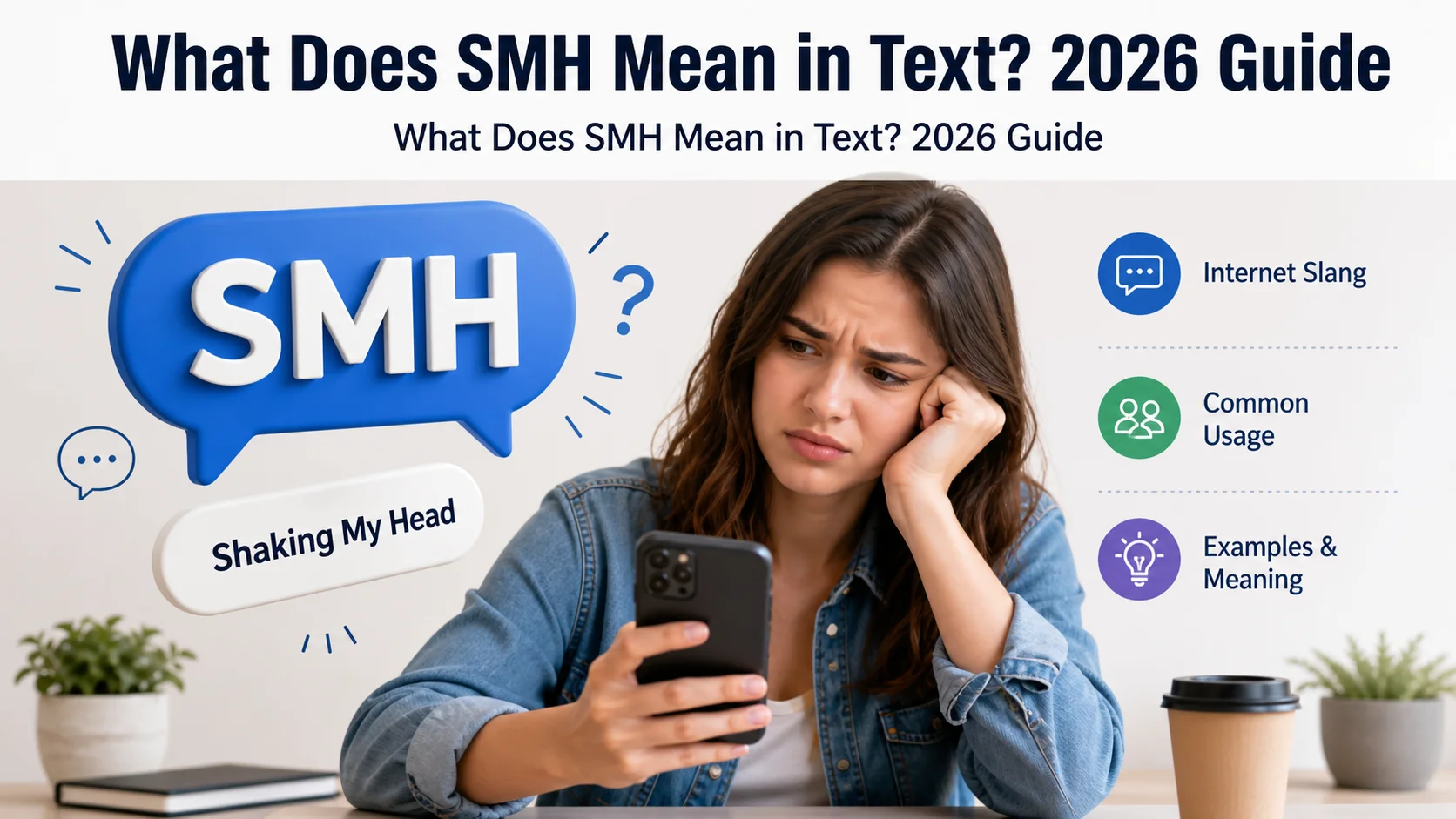
What Does SMH Mean in a Text: A Complete Guide (2026 Update) boils down to this: SMH means “shaking my head,” and in the U.S., it expresses disbelief, disappointment, or frustration. It often signals a silent reaction rather than a spoken response.
TL;DR
• SMH stands for “shaking my head”
• It shows disbelief, frustration, or mild disapproval
• Popular in American texting and social media culture
• Often replaces a full emotional reaction
• Tone depends on context—can be playful or serious
What Does SMH Mean in Texting?
SMH is one of the most widely used abbreviations in digital communication. It works like a quick emotional signal, helping people react without writing a full sentence.
Basic Meaning
At its core, SMH means physically shaking your head. However, in text, it becomes symbolic rather than literal.
• Expresses disbelief at something surprising or absurd
• Signals disappointment in someone’s actions
• Shows mild frustration without escalating conflict
• Adds emotional tone to otherwise plain messages
How It Appears in Conversation
Instead of explaining feelings, people often drop “SMH” at the end of a message. This creates a shared understanding without extra words.
• “You forgot again… SMH”
• “They really did that? SMH”
• “SMH, I can’t believe this”
Because of this, SMH acts like a digital gesture—similar to a sigh or eye roll.
The Origin and Evolution of SMH
Understanding SMH’s roots helps explain why it feels so natural today. Like many internet expressions, it evolved from earlier communication habits.
Early Internet Culture
SMH first gained traction in online forums and chat rooms in the early 2000s. However, it became mainstream with the rise of social media platforms.
• Early use in chatrooms and message boards
• Spread rapidly through platforms like Twitter and Facebook
• Adopted widely by younger American users
• Became part of everyday texting language by the 2010s
Why It Stuck
Short forms survive when they meet a need. SMH works because it’s quick and expressive.
• Saves time compared to full sentences
• Captures emotion without explanation
• Fits fast-paced digital conversations
• Easily understood across age groups
Symbolic Meaning Behind “Shaking My Head”
Although SMH is slang, it still carries symbolic weight. The physical act of shaking your head has long represented disapproval or disbelief.
Gesture as Symbol
Across cultures, shaking your head usually means “no” or “I don’t agree.” SMH taps into this shared understanding.
• Represents silent judgment or disbelief
• Suggests emotional distance or resignation
• Implies “this is not okay” without saying it directly
• Reflects a non-verbal reaction turned digital
Emotional Layers
The meaning of SMH changes depending on tone and context.
• Light humor: reacting to something silly
• Mild annoyance: showing frustration
• Strong disappointment: signaling disapproval
• Social commentary: reacting to trends or news
SMH Meaning in the USA
In the United States, SMH has become a staple of digital culture. It reflects how Americans communicate quickly and emotionally online.
Cultural Context
American communication often values speed and expression. SMH fits perfectly into this style.
• Common in texting, memes, and social media posts
• Used across age groups, especially younger users
• Appears in casual, not formal communication
• Often paired with humor or sarcasm
Everyday Usage
SMH shows up in many daily situations.
• Reacting to news headlines
• Commenting on social media drama
• Responding to friends’ mistakes
• Expressing disbelief in everyday conversations
SMH Across Different Contexts
The meaning of SMH shifts depending on where and how it’s used. Context matters more than the letters themselves.
Contextual Meaning Table
| Context | Meaning in the USA | Common Associations | Notes |
| Text messages | Mild frustration or disbelief | Friends, casual tone | Often playful |
| Social media | Commentary or judgment | Viral posts, memes | Can be sarcastic |
| Online debates | Disapproval or criticism | Arguments, opinions | Stronger tone |
| Humor posts | Light teasing | Jokes, relatable content | Not serious |
| News reactions | Shock or disappointment | Headlines, events | Reflects public mood |
Emotional and Psychological Meaning of SMH
SMH doesn’t just communicate words—it communicates feelings. It’s a shortcut to emotional expression.
What SMH Signals
When someone uses SMH, they’re often signaling an internal reaction.
• “I can’t believe this is happening”
• “This is disappointing”
• “I expected better”
• “This situation is frustrating”
Why People Use It
People use SMH because it feels natural and efficient.
• Avoids long explanations
• Softens criticism without direct confrontation
• Creates shared emotional understanding
• Adds personality to messages
Also Read This: What Does GC Mean in Text? 2026 Guide
SMH in Social Media and Pop Culture
SMH has become part of online identity and expression. It appears everywhere from memes to comment sections.
Popular Usage
• Used in viral tweets and trending posts
• Appears in meme captions
• Common in reaction videos and comments
• Integrated into everyday online language
Role in Digital Identity
Using SMH can reflect personality and tone.
• Shows humor or sarcasm
• Signals awareness of trends
• Helps build relatable content
• Connects users through shared reactions
Is SMH Rude or Offensive?
SMH isn’t inherently rude, but tone matters. It can come across differently depending on context.
When It Feels Neutral
• Used among friends in casual conversation
• Expressing mild disbelief or humor
• Reacting to harmless situations
When It Feels Negative
• Used in arguments or criticism
• Directed at someone’s mistake
• Paired with sarcasm or judgment
Because it implies disapproval, SMH can feel dismissive if overused.
Common Variations and Related Slang
SMH is part of a larger group of emotional abbreviations. These variations expand its meaning.
Similar Expressions
• “SMH my head” (redundant but popular jokingly)
• “SMDH” (shaking my damn head—stronger emotion)
• “Facepalm” (similar visual reaction)
• “LOL” or “OMG” (different emotional tones)
Why Variations Exist
• Add emphasis or humor
• Reflect evolving language trends
• Show personal style in communication
• Keep slang fresh and relevant
Misunderstandings and Misuse of SMH
Even simple slang can be misunderstood, especially across generations or cultures.
Common Confusion
• Some think it means something offensive
• Others misread tone without context
• Non-native speakers may not recognize it
• Older users may interpret it differently
Avoiding Misuse
• Use SMH in casual settings only
• Consider tone before sending
• Avoid in formal communication
• Be mindful of audience
How SMH Has Changed Over Time
Like all language, SMH has evolved. Its meaning has shifted slightly with usage.
Early vs. Modern Use
• Early use: more literal frustration
• Modern use: broader emotional range
• Now includes humor and irony
• Often used casually rather than seriously
Current Trends (2025–2026)
• Still widely used across platforms
• Appears in memes and short-form videos
• Used alongside emojis and GIFs
• Remains relevant despite new slang
FAQs
What does SMH mean in texting?
SMH means “shaking my head.” It shows disbelief, frustration, or disappointment in a quick, casual way.
Is SMH negative or positive?
It’s usually neutral to negative. However, it can be playful depending on context and tone.
Can SMH be used in formal messages?
No, SMH is informal slang. It’s best used in casual texts or social media.
What is the difference between SMH and SMDH?
SMDH adds stronger emotion. It stands for “shaking my damn head,” showing more frustration.
Why do people use SMH instead of words?
It’s faster and more expressive. It also captures emotion without needing full sentences.
Is SMH still popular in 2026?
Yes, SMH remains widely used. It continues to appear in texts, memes, and online conversations.
Conclusion
Language is always changing, and SMH is a perfect example of how people adapt communication to fit modern life. What started as a simple abbreviation has become a powerful emotional signal in digital conversations.
In the United States, SMH reflects more than frustration—it shows how people react quickly, share feelings, and connect through shared experiences online. It’s short, but it carries meaning.
What Does SMH Mean in a Text: A Complete Guide (2026 Update) ultimately reveals something bigger: even the smallest phrases can hold layers of emotion, culture, and human expression.