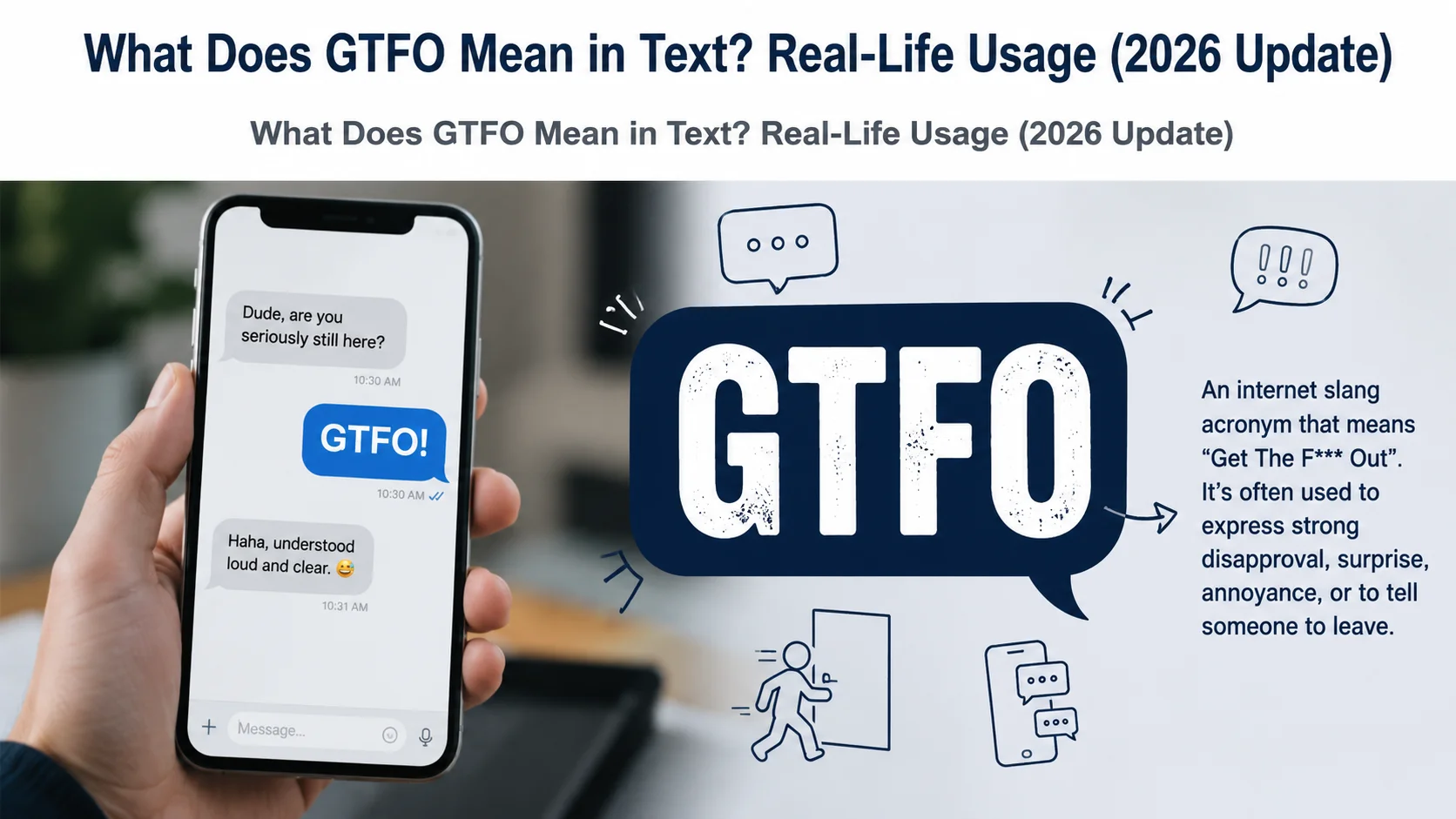
In today’s fast-moving digital world, short text phrases carry big emotional weight. One of the most striking examples is “GTFO.” If you’ve seen it in a message, meme, or comment thread, you may have wondered what it really means—and how seriously to take it.
What Does GTFO Mean in Text? Real-Life Usage (2026 Update) explores more than just a definition. It uncovers the tone, history, and cultural meaning behind this bold expression. In the United States especially, GTFO sits at an interesting crossroads between humor, shock, and outright offense.
Understanding GTFO isn’t just about language. It’s about reading social cues, emotional intent, and modern digital culture.
Quick Answer
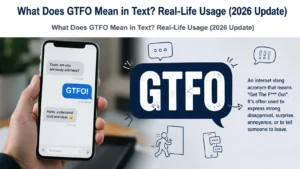
What Does GTFO Mean in Text? In U.S. texting culture, “GTFO” usually means “Get The F*** Out.” It can signal disbelief, anger, or joking surprise depending on context. Today, it’s often used humorously among friends but can sound harsh in serious situations.
TL;DR
• GTFO stands for “Get The F*** Out”
• Tone ranges from joking disbelief to anger
• Common in U.S. texting, memes, and gaming
• Context decides if it’s funny or offensive
• Often used among friends, less safe in formal chats
What Does GTFO Mean in Text?
This section breaks down the phrase itself and why it carries such a strong impact in American communication today.
Literal Meaning
At its core, GTFO is a blunt command. It expands to:
• “Get the f*** out” as a direct phrase
• A demand for someone to leave immediately
• A reaction to something shocking or unbelievable
However, literal meaning rarely tells the full story.
Tone and Context Matter
In the U.S., tone changes everything. The same phrase can feel very different depending on how it’s used:
• Playful shock between friends
• Sarcastic disbelief in casual chats
• Aggressive dismissal in arguments
• Dramatic reaction in memes
Because of this, GTFO acts more like a “tone signal” than a fixed meaning.
Where Did GTFO Come From?
To understand its symbolism, we need to look at how it developed over time.
Early Origins
GTFO comes from a longer phrase that existed long before texting:
• Rooted in spoken slang from the late 20th century
• Popular in urban American English
• Spread through movies, TV, and stand-up comedy
The abbreviation appeared later, as digital communication demanded speed.
Rise of Internet Slang
By the early 2000s, GTFO became widely recognized online:
• Used in chat rooms and forums
• Common in multiplayer gaming culture
• Spread through early meme communities
Short forms like GTFO became essential in fast-paced typing environments.
Why GTFO Became Popular in the USA
American culture helped shape how GTFO is used today.
Influence of Media and Humor
U.S. entertainment often uses exaggerated reactions. GTFO fits perfectly:
• Seen in comedy shows and viral videos
• Used for dramatic or comedic effect
• Reinforced by meme culture
Digital Communication Style
Americans often favor expressive, informal language in texting:
• Short, emotional phrases feel authentic
• Humor often includes exaggeration
• Shock reactions are common in online spaces
This made GTFO a natural fit for everyday digital talk.
GTFO Meaning in Different Contexts
GTFO doesn’t mean the same thing everywhere. Context shapes interpretation.
Common Situations
• Reacting to unbelievable news: “GTFO, no way!”
• Joking with friends: playful teasing
• Arguing: telling someone to leave
• Gaming: dismissing a player or situation
Context vs. Tone Table
| Context | Meaning in the USA | Common Associations | Notes |
| Friendly Chat | Playful disbelief | Humor, exaggeration | Usually harmless |
| Arguments | Aggressive dismissal | Anger, frustration | Can feel offensive |
| Social Media | Dramatic reaction | Memes, viral humor | Often exaggerated |
| Gaming | Competitive frustration | Trash talk, fast reactions | Depends on community tone |
| Text Messaging | Casual emotional expression | Surprise, sarcasm | Highly context-dependent |
Emotional and Psychological Meaning
Beyond words, GTFO carries emotional signals.
What It Expresses
• Shock or disbelief
• Humor through exaggeration
• Frustration or anger
• Social bonding through shared tone
Why People Use It
People often use GTFO because it feels:
• Strong and immediate
• Emotionally expressive
• Culturally familiar
• Slightly rebellious or edgy
However, this intensity can also cause misunderstandings.
Also Read This: What Does WDYM Mean in Text? 2026 Guide
Is GTFO Offensive or Just Funny?
This is one of the most common questions—and the answer isn’t simple.
When It’s Funny
• Among close friends who share humor
• In clearly exaggerated situations
• In memes or lighthearted chats
When It’s Offensive
• In professional or formal settings
• With people you don’t know well
• During serious conversations
• When tone is unclear
Because it includes profanity, GTFO always carries some risk.
GTFO in Social Media and Memes
Modern usage has expanded far beyond simple texting.
Meme Culture
GTFO is often used in memes to show exaggerated reactions:
• “GTFO, that can’t be real”
• Reaction images with bold captions
• Dramatic storytelling posts
Viral Language Trends
Social media platforms helped normalize the phrase:
• TikTok-style reactions
• Twitter/X commentary
• Group chat humor
In many cases, the phrase is more about entertainment than meaning.
GTFO in Gaming Culture
Gaming played a major role in shaping GTFO’s tone.
Competitive Environments
• Fast communication requires short phrases
• Emotional reactions are common
• Trash talk is part of some communities
Cooperative Games
Interestingly, GTFO can also be used humorously:
• Warning teammates jokingly
• Reacting to unexpected events
• Creating shared humor in tense moments
Still, tone can quickly shift from fun to toxic.
Cross-Cultural Perspectives on GTFO
While GTFO is rooted in American slang, it appears globally.
Outside the USA
• Often understood due to internet exposure
• May sound harsher in cultures with formal speech norms
• Sometimes misunderstood as purely aggressive
Cultural Sensitivity
Because it includes profanity:
• Some cultures avoid using it entirely
• Others adopt it mainly in online spaces
• Meaning may not translate cleanly
This makes context even more important internationally.
Misunderstandings and Common Mistakes
GTFO is easy to misuse if you don’t understand its tone.
Common Errors
• Using it in professional emails
• Sending it to someone unfamiliar
• Misreading humor as aggression
• Overusing it in serious discussions
How to Avoid Problems
• Consider your relationship with the person
• Think about tone and timing
• Use softer alternatives when unsure
A simple phrase can carry unintended weight.
How GTFO Meaning Has Changed Over Time
Like many slang terms, GTFO has evolved.
Earlier Meaning
• Mostly aggressive or confrontational
• Used in direct speech or arguments
Modern Meaning
• More flexible and context-driven
• Often humorous or exaggerated
• Widely accepted in casual digital spaces
This shift reflects broader changes in communication styles.
GTFO vs Similar Slang Terms
GTFO isn’t the only phrase that expresses strong reactions.
Comparable Expressions
• “No way” – softer disbelief
• “Get out of here” – less harsh version
• “OMG” – emotional surprise
• “Seriously?” – questioning tone
Key Difference
GTFO stands out because it combines:
• Shock
• Humor
• Aggression
That mix makes it powerful—but risky.
When Should You Use GTFO?
Understanding when to use it can prevent awkward moments.
Safe Situations
• Close friends who share your humor
• Casual group chats
• Meme or joke contexts
Situations to Avoid
• Work communication
• Conversations with strangers
• Serious or emotional discussions
When in doubt, it’s better to choose a softer phrase.
FAQs
What does GTFO stand for in text?
GTFO stands for “Get The F*** Out.” It’s used to express shock, disbelief, or anger depending on context.
Is GTFO always rude?
Not always. Among friends, it can be playful or funny. However, it can sound rude in formal or serious settings.
Can GTFO be used jokingly?
Yes, many people use it jokingly to react to surprising or unbelievable situations. Tone is key.
Is GTFO appropriate for work messages?
No, it’s generally not appropriate for professional communication due to its strong language.
What’s a safer alternative to GTFO?
Phrases like “no way,” “seriously?” or “get out of here” are softer and more widely acceptable.
Why do people use GTFO online?
People use it because it’s short, expressive, and fits the fast pace of digital communication.
Conclusion
What Does GTFO Mean in Text? Real-Life Usage (2026 Update) shows that this phrase is more than just slang. It’s a powerful mix of emotion, humor, and cultural style, shaped heavily by American digital communication.
Today, GTFO can signal anything from playful disbelief to outright frustration. However, its meaning always depends on context, tone, and relationship. What feels funny in one chat can feel harsh in another.
As language keeps evolving, phrases like GTFO remind us of one simple truth: words aren’t just about meaning—they’re about connection. Knowing how and when to use them makes all the difference.