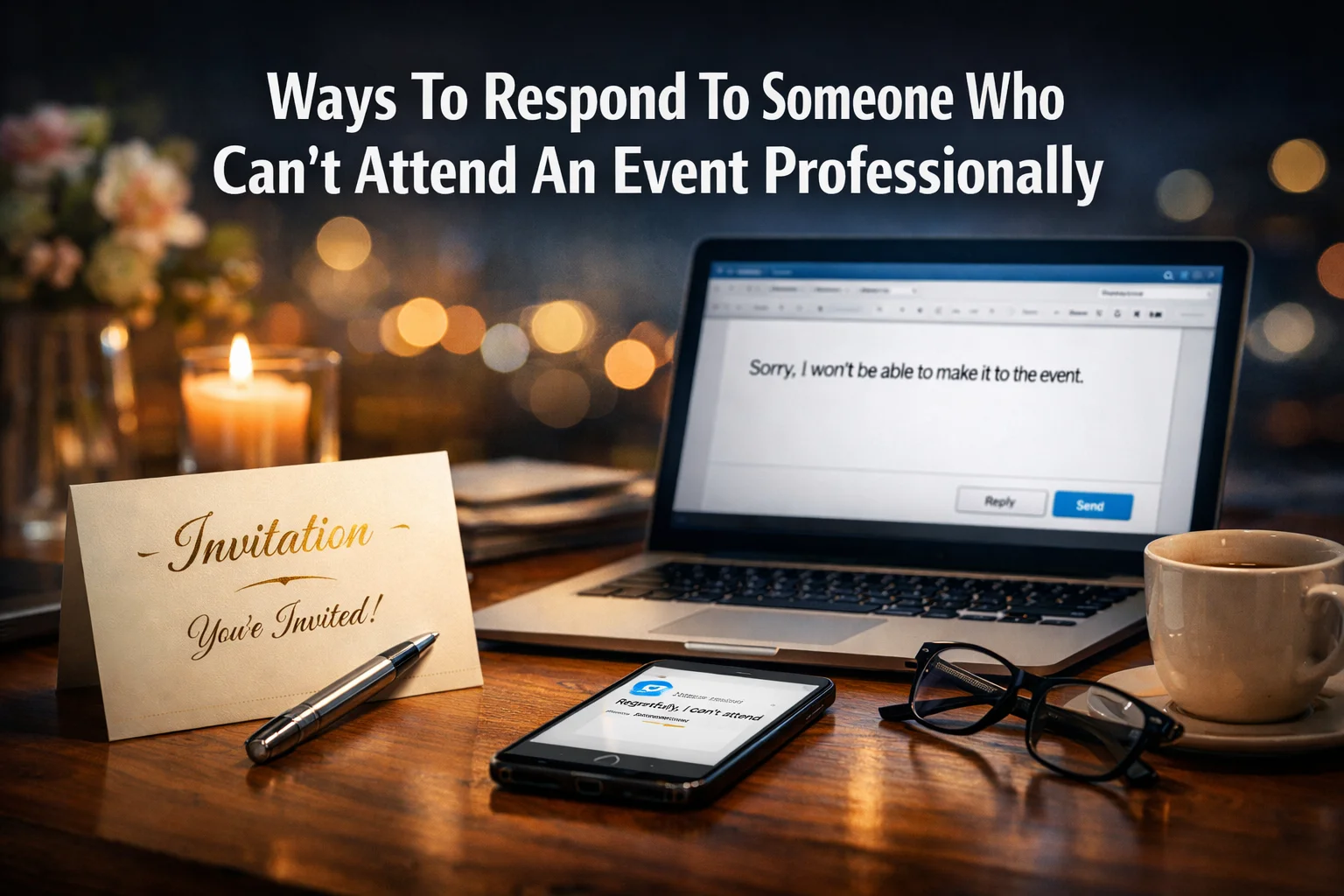
When someone tells you they are unable to attend an event, whether it’s a corporate meeting, conference, team celebration, or small gathering, responding professionally is key. Acknowledging their absence with warm gratitude and understanding helps maintain rapport and preserves relationships. A polite, human-first response reflects emotional intelligence, shows respect, and keeps doors open for future collaboration. Always confirm receipt of their message, express regret that they can’t attend, and, if appropriate, propose another meeting or way to share the event’s momentum with them. This approach protects the event’s goal, strengthens your reputation, and makes the attendee feel valued despite being absent.
In workplaces or networking settings, using a tactful, conversational, yet formal tone is practical. Responses can be verbal, emails, or messages, depending on the context, but should ensure clarity, politeness, and professionalism.
Another or Professional Way to Respond When Someone Can’t Attend an Event
- Acknowledge and Appreciate
- Express Understanding
- Offer to Reschedule
- Suggest a Virtual Option
- Provide a Brief Summary of What They’ll Miss
- Ask If They Need Materials
- Keep the Door Open
- Offer Condolences if Appropriate
- Recommend a Colleague
- Confirm Receipt and Next Steps
- Request a Quick Follow-Up
- Offer Help with Logistics
- Share Key Dates
- Invite Them to Future Events
- Send a Personal Note
- Offer a One-on-One Recap
- Ask for a Preferred Communication Method
- Offer an Alternative Role
- Express Flexibility
- Acknowledge Their Constraints
- Suggest a Short Check-In Call
- Provide a Recording or Minutes
- Reiterate Event Value
- Offer a Make-Up Opportunity
- Keep Tone Positive and Professional
- Respect Their Decision
- Avoid Pressure
- Thank Them for Letting You Know
- Offer to Share Contact List
- Wrap Up with Clear Next Steps
1. Acknowledge and Appreciate
When someone tells you they can’t attend, begin by acknowledging their message and thanking them for letting you know. A short, sincere response — “Thanks for telling me” — signals that you received the update and appreciate the courtesy. In a workplace story, a project manager received several last-minute declines; by replying with quick appreciation, the manager kept relationships positive and avoided awkward follow-ups. This approach reduces friction and sets a calm tone for subsequent coordination, especially when multiple attendees are involved and alternatives must be arranged.
Meaning: A short recognition of the update and appreciation for their communication.
Tone: Warm, brief, and respectful.
Example: Thank you for letting me know — I appreciate the heads-up.
Best Use: When you want to keep things friendly and efficient after a cancellation.
2. Express Understanding
Use a response that conveys empathy and understanding for their situation. People often miss events due to travel, family, or workload; telling them you understand keeps the relationship intact. For example, a team lead responded to an engineer’s cancellation by acknowledging a heavy sprint and offering support, which strengthened team trust. Saying you understand also reduces any defensive feelings the person might have and opens the door for future participation without awkwardness.
Meaning: Show that you recognize their reason may be valid and that you’re not upset.
Tone: Compassionate and neutral.
Example: I totally understand — no worries at all. Hope everything goes smoothly on your end.
Best Use: When the absence stems from busy schedules, personal matters, or work conflicts.
3. Offer to Reschedule
If the event’s purpose allows flexibility, propose a reschedule or alternative date. A small nonprofit organizer rescheduled a donor briefing after key supporters couldn’t attend and found that accommodating availability improved turnout and goodwill. Offering an easy reschedule shows you value their contribution and are willing to be flexible to secure their involvement. This is especially effective when the attendee’s presence is important to the meeting’s objectives.
Meaning: Propose an alternative time to retain the attendee’s participation.
Tone: Helpful and proactive.
Example: Would another date next week work for you? I’m happy to reschedule.
Best Use: When the person’s attendance is important and the event can be shifted.
4. Suggest a Virtual Option
When someone can’t attend in person, offer a virtual attendance option if possible. A conference coordinator who offered a livestream to remote attendees saw participation remain stable even when travel issues caused absences. Suggesting a remote option demonstrates adaptability and keeps the content accessible. It also signals that you value their input and want to remove barriers to participation, which can be critical for tight schedules or long distances.
Meaning: Offer a remote way to participate so they don’t miss key information.
Tone: Practical and accommodating.
Example: If travel is the issue, we can set you up on Zoom — would that help?
Best Use: For events with hybrid-friendly formats or where content can be shared virtually.
5. Provide a Brief Summary of What They’ll Miss
Offer a succinct summary of the key points or agenda items they’ll miss so they stay informed. After a strategic planning session, a department head sent a two-paragraph recap to a team member who couldn’t attend, preserving alignment and avoiding knowledge gaps. Summaries keep absent participants in the loop and reduce repeated questions later. They also show that you’re organized and considerate of people who couldn’t be present.
Meaning: Give a concise overview of the event’s highlights and outcomes.
Tone: Informative and concise.
Example: We’ll cover the new timeline and budget changes; I’ll email a short recap afterward.
Best Use: When continuity and alignment matter and you want to avoid follow-up confusion.
6. Ask If They Need Materials
Promptly offering to send slides, handouts, or briefing notes helps those who can’t attend stay caught up. A sales lead who missed a pitch appreciated the immediate offer of materials and was able to give feedback asynchronously, which kept the project moving. Offering materials demonstrates foresight and helps maintain momentum on decisions or feedback loops that depend on the absent person’s input.
Meaning: Offer supporting documents to help them review what they missed.
Tone: Helpful and efficient.
Example: Would you like the slides and notes afterward? I can send them over.
Best Use: When the event includes shareable content like slides, reports, or demos.
7. Keep the Door Open
Let them know they’re welcome at future events instead of treating the absence as final. A community organizer who replied with an open invitation converted a one-time decline into long-term engagement for subsequent meetups. Keeping the door open is a soft, relationship-focused approach that signals continuing interest in the person’s participation without pressure. It supports long-term networking and goodwill.
Meaning: Express continued interest in their future participation.
Tone: Inviting and hopeful.
Example: Sorry you can’t make it — we’d love to have you at the next one.
Best Use: For recurring events or when building ongoing relationships matters.
8. Offer Condolences if Appropriate
If the reason for absence is personal loss or illness, a brief, sincere expression of sympathy is appropriate and humanizes professional interactions. A manager who offered condolences before discussing logistics preserved dignity and trust during a stressful time. This tactful approach respects emotional boundaries and shows you value the person beyond the event itself.
Meaning: Express sympathy when the absence is due to a serious personal matter.
Tone: Respectful and compassionate.
Example: I’m so sorry to hear that — my thoughts are with you. Take whatever time you need.
Best Use: When the cancellation references illness, bereavement, or other serious issues.
9. Recommend a Colleague
If the person’s role matters at the event, suggest a colleague who can attend in their place. A product manager who suggested a backup presenter ensured the session still had subject-matter expertise and avoided postponement. Recommending an alternate keeps operations smooth and shows that you’re solution-oriented while respecting the original attendee’s constraints.
Meaning: Propose someone else who can fill the role or represent them.
Tone: Resourceful and collaborative.
Example: If you can’t make it, would Sarah be able to join in your place?
Best Use: When the attendee had a specific responsibility or role at the event.
10. Confirm Receipt and Next Steps
Acknowledge their cancellation and outline any immediate next steps so there’s no ambiguity. An event planner who confirms receipt and next steps after a decline avoids duplicate replies and clarifies expectations for planning. This concise administrative response is especially useful when multiple people are coordinating and decisions depend on updated attendance lists.
Meaning: Confirm you received their message and state what will happen next.
Tone: Clear and administrative.
Example: Got it — I’ve updated the attendee list and will share minutes afterward.
Best Use: For logistical clarity in organized or multi-stakeholder events.
11. Request a Quick Follow-Up
Ask if they’d like a brief one-on-one afterward to cover what they missed. A client who couldn’t attend a project kickoff appreciated a 15-minute catch-up that kept them aligned and avoided delays. A quick follow-up is efficient and prevents misunderstandings that might otherwise slow decision-making. It also demonstrates respect for both parties’ time by keeping the recap focused.
Meaning: Offer a short meeting to bring them up to speed.
Tone: Considerate and time-aware.
Example: Want to grab 15 minutes after the event for a quick recap?
Best Use: When their input is important and a short debrief will suffice.
12. Offer Help with Logistics
If the absence is due to travel or schedule conflicts, offer help such as directions, travel tips, or alternate timing. A volunteer coordinator who helped arrange shared transportation after a cancellation improved accessibility and participation. This practical assistance can remove barriers for future events and shows you’re attentive to real-world constraints.
Meaning: Provide tangible assistance that might make future attendance easier.
Tone: Practical and supportive.
Example: If travel is tricky, I can share nearby parking options or adjust the start time.
Best Use: When logistical hurdles (travel, parking, time zones) prevent attendance.
13. Share Key Dates
If the event informs future milestones, remind the person of relevant dates they should note. After a product demo, a PM sent the missed attendee a calendar of important deadlines so they could contribute timely feedback. Sharing dates keeps absent participants aligned with the timeline and reduces the chance of missed deliverables or misunderstandings down the line.
Meaning: Communicate important follow-up dates or deadlines they need to know.
Tone: Clear and timeline-focused.
Example: No problem — just FYI, feedback is due by Friday, March 12.
Best Use: When the event impacts schedules, deliverables, or decision points.
14. Invite Them to Future Events
Extend a specific invitation to an upcoming event that might fit their schedule. An HR lead who invited a busy executive to an online briefing later converted a one-time decline into high-value future attendance. Inviting them proactively demonstrates you value their presence and are thinking ahead about how to include them.
Meaning: Offer a concrete future opportunity to participate.
Tone: Optimistic and welcoming.
Example: We have a webinar next month — would you like an invite?
Best Use: When events recur or when you can offer alternatives that better fit their availability.
15. Send a Personal Note
A handwritten or personalized message after a cancelation can strengthen professional bonds. After a major donor missed a fundraising luncheon, the organizer sent a brief personal note expressing regret and offering a one-on-one meeting, which maintained rapport. Personal touches show that you value the relationship and aren’t solely focused on attendance metrics.
Meaning: Use a tailored message to maintain the relationship personally.
Tone: Warm and individualized.
Example: I’ll miss seeing you — let’s do coffee next week to catch up.
Best Use: When the relationship is important and worth a personalized outreach.
Also Read This: 30 Best Replies to Warning Letter for Late Coming
16. Offer a One-on-One Recap
If the missed content is strategic, propose a dedicated recap to ensure they understand decisions and next steps. A founder who offered a private walkthrough of board meeting outcomes secured critical alignment from an absent investor. One-on-one recaps are useful when topics are complex or when the person’s input is needed for next actions.
Meaning: Provide a focused briefing to cover important outcomes.
Tone: Respectful and thorough.
Example: I can walk you through the highlights in a 20-minute call — when works?
Best Use: For strategic meetings where nuanced context matters.
17. Ask for a Preferred Communication Method
Ask whether they’d prefer an email summary, recording, or call — match how they best engage. A nonprofit director who adapted to an absent volunteer’s preference (email digest instead of a call) improved responsiveness. Tailoring the follow-up method respects the attendee’s time and improves the chance they’ll engage with the material.
Meaning: Let them choose how they want the update delivered.
Tone: Flexible and customer-focused.
Example: Would you prefer a quick email summary or a short call afterward?
Best Use: When different communication formats are available and the person’s preference matters.
18. Offer an Alternative Role
If they can’t attend but still want to contribute, propose a way they can participate asynchronously, such as submitting a comment or recorded message. An absent keynote contributor who recorded remarks in advance still influenced the session and felt included. Offering alternative roles preserves their voice and keeps them engaged without requiring live attendance.
Meaning: Provide ways to contribute that don’t require being there in person.
Tone: Inclusive and creative.
Example: If you can’t be there live, would you like to record a short message we can play?
Best Use: When their input matters but synchronous presence isn’t strictly necessary.
19. Express Flexibility
Communicate that you’ll adapt where possible to accommodate their constraints. A workshop organizer who adjusted start times for key stakeholders avoided rescheduling entirely and kept the agenda on track. Flexibility signals collaboration and a willingness to center people’s realities rather than strict schedules.
Meaning: Let them know you’re willing to adjust plans to help them participate.
Tone: Accommodating and collaborative.
Example: We can shift the start by 30 minutes if that helps — your call.
Best Use: When minor adjustments can permit participation without major disruption.
20. Acknowledge Their Constraints
Recognize specific constraints they mention — workload, family, travel — and respond sympathetically. A project coordinator who referenced a colleague’s heavy deliverable week and deferred non-urgent items reduced stress and kept morale high. Acknowledging constraints communicates that you pay attention and value their context.
Meaning: Call out the reason they gave and show understanding for it.
Tone: Empathetic and aware.
Example: I hear you — sounds like this week is intense. Let’s catch up when it eases up.
Best Use: When the attendee shared a reason and you want to validate it.
21. Suggest a Short Check-In Call
Offer a 10- to 15-minute call to catch the person up on essentials rather than a full meeting. After a client missed a status update, a 12-minute call kept the project moving without overcommitting anyone’s time. Brief catch-ups respect busy schedules while ensuring critical alignment and preventing information loss.
Meaning: Propose a time-efficient way to align on essentials.
Tone: Concise and respectful of time.
Example: Could we do a 10-minute call tomorrow to go over the key decisions?
Best Use: When the matter can be resolved quickly and doesn’t require lengthy discussion.
22. Provide a Recording or Minutes
If the event can be recorded, offer the recording or formal minutes so they can review later. An academic seminar that provided recordings to absent attendees maintained engagement and widened reach. Recordings and minutes are reliable references and reduce repeated explanations later, supporting transparency and knowledge sharing.
Meaning: Share a preserved record so they can access the full content later.
Tone: Professional and resourceful.
Example: I’ll send the meeting recording and minutes so you can review at your convenience.
Best Use: For content-rich events where accuracy and detail matter.
23. Reiterate Event Value
Briefly restate why the event mattered and what the person might gain from the materials or future sessions. A recruiter who highlighted networking benefits for a missed employer info session encouraged the candidate to attend the next one. Reiterating value helps people prioritize future attendance and understand why your outreach matters.
Meaning: Remind them of the event’s intended benefits without sounding pushy.
Tone: Persuasive yet respectful.
Example: We’ll cover three hiring updates that might interest you; I can share the highlights.
Best Use: When building interest for future participation or for follow-up engagement.
24. Offer a Make-Up Opportunity
Where feasible, provide a makeup session or individual briefing to ensure they don’t miss important content. After someone missed a mandatory compliance training, HR offered a short, private session to get them certified quickly. Make-up opportunities keep compliance and continuity intact while showing you’re committed to inclusivity.
Meaning: Provide a concrete alternative to cover missed requirements.
Tone: Supportive and practical.
Example: We can schedule a 30-minute make-up session next week if that works.
Best Use: When attendance has consequences (training, certification, or approvals).
25. Keep Tone Positive and Professional
Always choose phrasing that is upbeat and professional to leave a good impression despite the absence. A marketing lead who remained positive after multiple declines maintained an upbeat brand image and kept stakeholders engaged. A positive tone prevents small cancellations from becoming relational friction and models professionalism for your team.
Meaning: Maintain courtesy and optimism in your reply.
Tone: Positive and composed.
Example: Thanks for the update — looking forward to catching up soon.
Best Use: In all professional interactions where relationship preservation is a priority.
26. Respect Their Decision
Avoid pressuring or guilt-tripping the person; simply accept their choice and move forward. An organizer who respected a volunteer’s need to step back preserved goodwill and saw that volunteer return for future activities. Respecting decisions keeps doors open and prevents resentment or awkwardness.
Meaning: Accept their inability to attend without judgment or pressure.
Tone: Respectful and non-confrontational.
Example: Totally fine — I appreciate the heads-up and hope to see you next time.
Best Use: When you want to maintain long-term professional rapport.
27. Avoid Pressure
Do not try to cajole or guilt someone into attending; this harms relationships. A sponsor who refused to pressure a busy partner kept trust intact and still received support later. Avoiding pressure shows emotional intelligence and safeguards future collaboration opportunities by not making people feel cornered.
Meaning: Refrain from persistent persuasion or guilt-inducing language.
Tone: Calm and boundary-respecting.
Example: No pressure at all — I understand and we’ll miss you.
Best Use: When the person has already declined and you want to keep the relationship healthy.
28. Thank Them for Letting You Know
Conclude by thanking them for the notification; this reinforces good communication habits. A nonprofit saw fewer last-minute surprises after consistently thanking members who RSVP’d changes. Expressing gratitude encourages future transparency and makes planning easier for organizers.
Meaning: A short expression of thanks for their courtesy.
Tone: Appreciative and reinforcing.
Example: Thanks for the update — I appreciate you letting me know.
Best Use: As a polite closing line in most cancellation responses.
29. Offer to Share Contact List
If networking is a purpose of the event, offer to connect them with key contacts they would have met. After a missed industry mixer, an organizer emailed curated intros to the absent attendee and preserved networking value. This keeps the attendee engaged and ensures the effort invested in relationships still benefits them.
Meaning: Provide introductions or contacts they missed to keep networking benefits intact.
Tone: Generous and facilitative.
Example: I can introduce you to the three people we planned to connect you with — want me to send emails?
Best Use: When networking or introductions are central to the event’s value.
30. Wrap Up with Clear Next Steps
End your reply by clarifying what will happen next — who will send minutes, when the recording will be available, or when a follow-up meeting might occur. After a board meeting, a secretary who clearly listed next steps ensured absent members knew expectations and deadlines. Clear next steps reduce ambiguity and help everyone stay aligned after the event.
Meaning: State concrete actions and timelines to avoid confusion.
Tone: Directive and reassuring.
Example: I’ll send the recording by end of day and follow up about next steps on Monday.
Best Use: When clarity and follow-through are essential after the event.
FAQs
How should I respond when someone declines my event invitation professionally?
You should respond with warm gratitude and understanding, acknowledge their absence, and express regret that they can’t attend. Offering a future meeting or another way to share the event’s momentum shows emotional intelligence and maintains the relationship.
What tone is best for responding to a guest who can’t attend?
A polite, human-first, and professionally conversational tone works best. It reflects empathy, protects your reputation, and keeps doors open for future collaboration while being respectful of the attendee’s situation.
Should I send a follow-up if someone can’t make it?
Yes. Confirming receipt of their message, sharing updates from the event, or proposing a future meeting strengthens the connection and shows that you value them even in their absence.
Can responses be verbal, email, or messages?
Absolutely. Responses can be emails, messages, or verbal, depending on the context. The key is to ensure clarity, professionalism, and tact, keeping the interaction polished and respectful.
How do I maintain a positive connection despite their absence?
Acknowledging the effort they worked hard to attend, expressing gratitude, and proposing future collaboration helps preserve rapport. Sharing updates from the event or conference keeps the relationship warm and professional.
Conclusion
Responding professionally when someone can’t attend an event is more than just a polite gesture—it preserves relationships, protects the event’s momentum, and strengthens your reputation. By acknowledging their absence with warmth, empathy, and clarity, while proposing future meetings or updates, you maintain a positive connection and keep doors open for collaboration. Whether through emails, messages, or verbal communication, a tactful, human-first approach ensures everyone feels valued, and the professional relationship continues to grow even when they are absent.