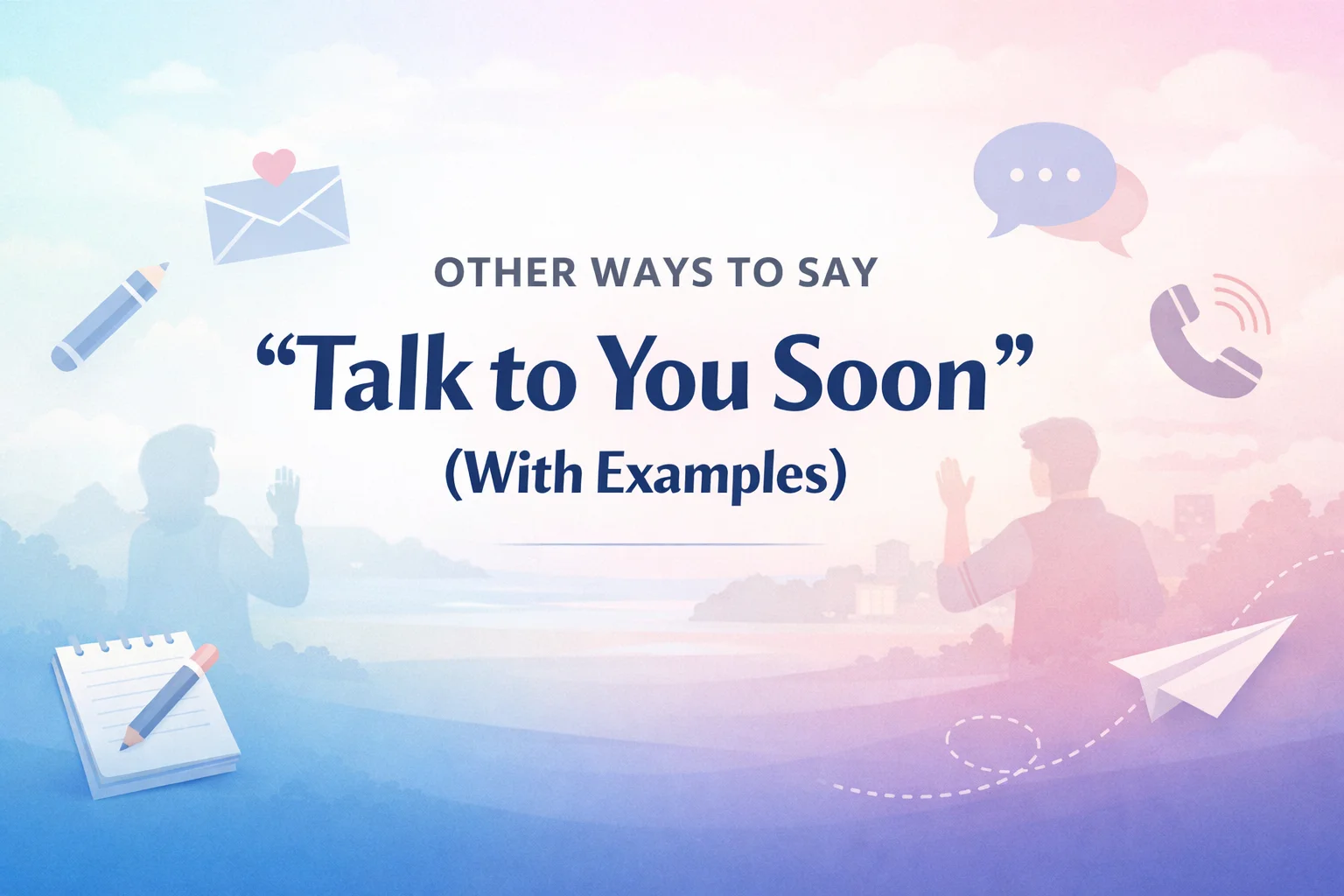
When you sit down to write an email, text, or prepare for a call, you might realize that you’ve used the same phrase—“Talk to you soon”—countless times. It’s easy to fall into this habit, especially in daily communications, because it feels comfortable and familiar. But over time, repeatedly wrapping up a conversation the same way can make your closing remarks lose their impact and feel a bit flat or impersonal. In this blog post, I want to explore some alternative expressions that can add a fresh touch to your farewells, whether in informal, professional, or business contexts.
Using 30 original alternatives, you can share a variety of phrases and idioms that convey a friendly, anticipatory tone naturally. From emails and texts to voice conversations, these options range from casual and playful to polished and professional, helping you convey your intention for future communication clearly. Choosing the right words enhances professionalism, builds credibility, and leaves a lasting impression on clients, stakeholders, or friends. Whether you’re drafting a follow-up, preparing for meetings, or signing off after a chat, these thoughtful, engaging variations make your goodbyes meaningful, polite, and memorable, showing care and friendliness without ever sounding stale or repetitive.
Another or Professional Way to Say “Talk to You Soon”
- Speak soon
- Chat soon
- Catch up soon
- I’ll be in touch
- Talk later
- Catch you later
- Be in touch
- I’ll call you
- Let’s touch base
- I’ll reach out
- More soon
- Talk shortly
- Speak with you soon
- I’ll follow up
- We’ll talk soon
- Until next time
- Talk to you soon — take care
- I’ll ping you
- I’ll drop you a line
- I’ll get back to you
- Let’s reconnect soon
- I’ll be back in touch
- Ping me anytime
- Talk then
- Looking forward to our chat
- I’ll touch base soon
- I’ll loop back
- I’ll be right with you
- We’ll be in touch
- Until we talk again
1. “Speak soon”
When you end a chat or text with “Speak soon,” it’s a straightforward promise that you’ll reconnect in the near future. Imagine you wrap up a project call with a colleague and say this as you both log off — the phrase is neutral, efficient, and implies follow-up without pinning down an exact time. It works well when both people expect another short interaction, like a follow-up status update or quick clarification. Use it to keep momentum after a productive conversation; it signals continuity and a low-pressure expectation that communication will continue. Because it’s short and friendly, “Speak soon” beautifully bridges casual and semi-formal tones, making it an email and chat staple.
Meaning: I will talk to you in the near future.
Tone: Polite, neutral.
Example: “Great progress today — speak soon.”
Best Use: Quick follow-ups after meetings or texts.
2. “Chat soon”
“Chat soon” feels a touch more informal than “speak soon,” and it suggests a relaxed catch-up rather than a formal check-in. Picture closing a friendly conversation with a peer or friend after sharing updates; this phrase keeps the mood light and social. It’s ideal when the next interaction will be conversational — a phone call, video chat, or friendly text thread — rather than a structured work meeting. In written messages, “Chat soon” signals warmth and familiarity, and in spoken farewells it sounds like an easy promise to reconnect. Because it’s casual, it’s particularly popular with friends, teammates, and colleagues with close working relationships.
Meaning: We’ll have a relaxed conversation soon.
Tone: Casual, warm.
Example: “That sounds fun — chat soon!”
Best Use: Friends, informal teammates, or social follow-ups.
3. “Catch up soon”
Use “Catch up soon” when you expect a longer update or conversation that revisits events since you last spoke. Imagine two old friends promising to compare life notes, or coworkers planning a catch-up to sync on project changes; the phrase implies a more substantive discussion than a quick check-in. It’s friendly and slightly nostalgic, often used when time has passed between conversations. In professional contexts it still works — for example, when two team members want a status meeting that’s informal but thorough. It’s a good choice when you want to invite storytelling, detailed updates, or a chance to realign priorities without sounding formal or robotic.
Meaning: Let’s reconnect to exchange updates soon.
Tone: Friendly, anticipatory.
Example: “I’m free next week — let’s catch up soon.”
Best Use: Longer informal/professional updates.
4. “I’ll be in touch”
“I’ll be in touch” is a slightly more formal promise often used in professional settings. Think of a job interview or a client call: it indicates you’ll initiate the next contact rather than leaving the ball in the other person’s court. The phrase is measured and dependable, useful when timing or details are still being arranged. It doesn’t commit to an immediate call but assures the recipient that action will follow. Because it carries a tone of responsibility, “I’ll be in touch” fits follow-ups, next steps after meetings, and situations where you need to gather information before returning with an update. It’s clear, professional, and appropriately neutral.
Meaning: I will contact you again when I have more information.
Tone: Professional, responsible.
Example: “Thanks for meeting — I’ll be in touch with the agenda.”
Best Use: Professional follow-ups and action-driven communication.
5. “Talk later”
“Talk later” is casual and immediate-sounding — the kind of phrase you might use when time is short but you plan to continue the conversation. Picture hanging up the phone briefly and promising to reconnect after a quick task; it’s informal and often used among colleagues, friends, and family. The phrase doesn’t promise a long discussion, just another touchpoint down the line. Because it’s so direct, it works well in quick-moving contexts where you don’t need to schedule formally and both parties understand the follow-up will happen when convenient. It’s short, friendly, and low-pressure.
Meaning: Let’s speak again later.
Tone: Casual, direct.
Example: “I need to run — talk later!”
Best Use: Fast-paced chats and brief interruptions.
6. “Catch you later”
“Catch you later” is colloquial and breezy — often used in informal, in-person farewells or casual text messages. It suggests a relaxed expectation of seeing or speaking again, without commitment to when. Imagine leaving a friend’s get-together or signing off from a chat thread; it keeps things light and friendly. In professional settings it’s less common unless the workplace culture is very casual. It’s great for social media signoffs, texts with friends, or informal teammates who appreciate a laid-back tone. Use it when you want to sound approachable and easygoing.
Meaning: I’ll see or speak to you at some point later.
Tone: Informal, friendly.
Example: “Nice seeing you — catch you later!”
Best Use: Casual social contexts and relaxed teams.
7. “Be in touch”
Short and slightly formal, “Be in touch” functions similarly to “I’ll be in touch” but reads less like a personal promise and more like a general expectation. It’s useful in emails and messages when coordination is necessary but timelines are flexible. Think of closing a networking email or post-meeting message where follow-up is expected but not urgent. It’s professional without being stiff and keeps the door open for future communication without overcommitting. Use it when you want to sound approachable while maintaining a professional distance.
Meaning: Communication will occur again at some point.
Tone: Neutral, professional.
Example: “Thanks for the insights — be in touch.”
Best Use: Networking messages and flexible follow-ups.
8. “I’ll call you”
“I’ll call you” is direct and action-focused — perfect when a phone conversation is the next step. Use it after agreeing to discuss details that are easier to handle by voice rather than text. Because it commits to a phone call specifically, it implies a more immediate or scheduled interaction than vague promises. It’s appropriate in both professional and personal contexts, especially when clarity or negotiation is needed. To be extra helpful, include timing (e.g., “I’ll call you tomorrow at 10”) to manage expectations and reduce back-and-forth.
Meaning: I will initiate a phone call.
Tone: Direct, decisive.
Example: “I’ll call you after I review the files.”
Best Use: When a phone call is needed to resolve details.
9. “Let’s touch base”
“Let’s touch base” is business-friendly and implies a brief check-in to align on progress or decisions. It’s widely used in corporate communication to suggest a quick sync rather than a deep dive. Use it when teams need status updates, to confirm timelines, or to ensure no one is blocked. While it’s professional, it can feel corporate-speak if overused, so pair it with specifics when possible: “Let’s touch base on Friday to finalize the plan.” That clarity keeps the phrase useful and purposeful. It signals collaboration and forward motion without pressure.
Meaning: Let’s have a short check-in to align.
Tone: Professional, collaborative.
Example: “Let’s touch base Monday to finalize next steps.”
Best Use: Quick professional syncs and status checks.
10. “I’ll reach out”
“I’ll reach out” is a polite, semi-formal promise often used when you’ll be the one to initiate next contact, and it implies you’ll do so thoughtfully. Think of follow-up after receiving a request or collecting information; this phrase reassures recipients that action will follow. It’s common in customer service, recruiting, and client communications because it doesn’t force a strict timeline but commits to outreach. It’s a good phrase when you need time to prepare or gather input before continuing the conversation.
Meaning: I will contact you proactively.
Tone: Considerate, professional.
Example: “I’ll reach out after I speak with the team.”
Best Use: Client-facing or preparatory follow-ups.
11. “More soon”
“More soon” is short, modern, and slightly casual — perfect for fast-moving professional or creative contexts where you will return with additional information. Imagine a project lead sending a brief status note: this phrase signals that the message is not final and that further details are coming. It’s efficient and tech-savvy, often used in startups, product updates, or quick social posts. Because it’s terse, pair it with a quick hint of what’s next to avoid ambiguity. “More soon” keeps the audience engaged and anticipating the next update.
Meaning: I’ll provide additional information shortly.
Tone: Brief, anticipatory.
Example: “We’re reviewing the numbers — more soon.”
Best Use: Fast updates in professional or creative contexts.
12. “Talk shortly”
“Talk shortly” promises a near-future conversation — it’s slightly more immediate than “talk soon.” Use it when you’ll pick up the call or message within a short, foreseeable window, such as after a quick task or meeting. The phrase works in both spoken and written communication and communicates that the wait will be brief. It’s useful when teams coordinate across time zones or schedules and want to avoid vagueness about follow-up timing. Keep it when you expect the next interaction within hours rather than days.
Meaning: We will speak in the near future (soon).
Tone: Immediate, practical.
Example: “I’m finishing something now — talk shortly.”
Best Use: When follow-up is expected within hours.
13. “Speak with you soon”
A slightly more formal variant of “speak soon,” this phrase adds a touch of politeness and clarity. It’s useful in emails after formal conversations, client calls, or when the relationship is cordial but professional. It carries a respectful tone and reassures the recipient that further communication is expected. It toes the line between warmth and formality, making it suitable for professional relationships where you want to be friendly without being overly casual. It’s a safe, polished sign-off that reads well in a variety of settings.
Meaning: I expect to talk with you in the near future.
Tone: Respectful, semi-formal.
Example: “Thank you for your time — speak with you soon.”
Best Use: Professional emails and calls with cordial tone.
14. “I’ll follow up”
“I’ll follow up” is action-oriented and often used to indicate that you will return with information, decisions, or confirmations. It’s a staple in business communication because it sets an expectation of responsibility. Use it after meetings, interviews, or client requests to show accountability. For clarity, partner it with timing or the type of follow-up — e.g., “I’ll follow up by Wednesday with the contract.” That specificity improves trust and reduces ambiguity. It’s dependable phrasing for managing projects and relationships.
Meaning: I will come back with information or confirmation.
Tone: Responsible, professional.
Example: “I’ll follow up with the revised draft tomorrow.”
Best Use: Project management and formal commitments.
15. “We’ll talk soon”
“We’ll talk soon” is inclusive and collaborative — it signals that both parties are expected to reconnect and emphasizes joint participation. Use it to close conversations where the next step is mutual, such as planning sessions or collaborative reviews. It’s friendly and slightly reassuring, making it useful between peers, stakeholders, or partners. The tone isn’t strictly formal, so it’s versatile across work and personal contexts. It suggests cooperation and continuity rather than placing the initiative on one person.
Meaning: Both of us will reconnect in the near future.
Tone: Collaborative, reassuring.
Example: “Thanks for your input — we’ll talk soon to finalize.”
Best Use: Collaborative follow-ups and team syncs.
Also Read This: 30 Other Ways to Say “Happy Thursday” (With Examples)
16. “Until next time”
“Until next time” has a slightly lyrical, warm quality — good for sign-offs that feel friendly and open-ended. It works well after more personal conversations or when you want to convey a gentle, lasting connection. It’s less transactional than “I’ll be in touch” and more evocative of ongoing rapport. Use it in newsletters, farewell messages, or when signing off from community conversations. It’s ideal where the relationship is ongoing and you want to express continuity with a softer touch.
Meaning: I look forward to our next conversation.
Tone: Warm, slightly sentimental.
Example: “Take care — until next time.”
Best Use: Newsletters, friendly community or personal sign-offs.
17. “Talk to you soon — take care”
This is a compound sign-off that pairs a promise to reconnect with a caring closing. It works beautifully in personal and semi-formal messages where you want to express both intent and concern. Use it after a thoughtful conversation or when someone shared personal updates; it acknowledges the next chat while also wishing them well. It’s empathetic without being overly familiar, making it suitable for colleagues you know well or clients you have a warm rapport with. The extra phrase “take care” adds humanity to the promise.
Meaning: I’ll be in touch soon; meanwhile, be well.
Tone: Caring, personable.
Example: “Thanks for sharing — talk to you soon, take care.”
Best Use: Warm professional or personal wrap-ups.
18. “I’ll ping you”
“I’ll ping you” is modern and slightly techy, common in workplaces that use instant messaging and collaborative tools. It signals a quick message (a “ping”) rather than a full call, which is helpful for informal check-ins or nudges. Use it when you’ll send a brief DM or message to nudge a conversation forward, confirm a detail, or set up a short chat. It’s best in teams that use Slack, Teams, or similar platforms and want a concise, contemporary tone. Keep in mind cultural fit — it’s casual and assumes shared tech habits.
Meaning: I’ll send a quick message to you soon.
Tone: Informal, tech-savvy.
Example: “I’ll ping you once the doc is updated.”
Best Use: Instant-message follow-ups in tech-savvy teams.
19. “I’ll drop you a line”
This slightly old-school phrase is warm and personable; it originally referred to sending a short written note but now fits brief emails or messages. It conveys informal intention and a gentle, considerate tone. Use it when you’ll reach out with a quick summary, an update, or a personal message — for example, following a networking event where you promised to share a resource. It’s friendly and less transactional than corporate phrasing, making it ideal for relationship-building communications.
Meaning: I will send a short message to you soon.
Tone: Friendly, classic.
Example: “Thanks for the chat — I’ll drop you a line about next steps.”
Best Use: Networking and personal follow-ups.
20. “I’ll get back to you”
Common in both personal and professional contexts, “I’ll get back to you” indicates you need time to gather information or think before responding. It’s practical and honest — perfect when you can’t answer immediately but will return once you have a clear reply. Use it when decisions or data are pending, or after a request that requires input from others. Pairing it with an expected timeframe increases clarity and trust: “I’ll get back to you by Friday.” It’s a reliable phrase for managing expectations.
Meaning: I will respond after I have the necessary information.
Tone: Practical, clear.
Example: “I don’t have that number yet — I’ll get back to you.”
Best Use: When research or internal input is required.
21. “Let’s reconnect soon”
“Let’s reconnect soon” is an invitation with a collaborative tone — it suggests both parties make space to resume the conversation. It’s slightly more formal than “catch up” and well-suited to professional relationships that aren’t daily but need periodic reconnection. Use it with clients, partners, or colleagues when you want to schedule a new check-in without sounding abrupt. It signals intention and mutual responsibility for maintaining the connection, which helps sustain professional networks and project continuity.
Meaning: Let’s make time to talk again in the near future.
Tone: Professional, inviting.
Example: “We’ve covered a lot — let’s reconnect soon with the updated plan.”
Best Use: Client and partner follow-ups.
22. “I’ll be back in touch”
This phrasing is reassuring and slightly formal, good when you expect to return with a more detailed update after an interval. It’s useful in contexts where progress depends on external factors — legal review, client approval, or third-party feedback. It keeps the recipient informed that the communication chain is not closed. “I’ll be back in touch” is polite and dependable, helping manage expectations without committing to exact timing. Use it when you want to preserve a professional tone while promising further contact.
Meaning: I will contact you again when I have further information.
Tone: Reassuring, formal.
Example: “I’ll be back in touch after the approvals come through.”
Best Use: Formal updates requiring waiting periods.
23. “Ping me anytime”
This flips the initiative to the recipient, offering openness and accessibility. “Ping me anytime” is casual and welcoming — great for colleagues, mentees, or friends who might need quick help. It communicates that you’re available for short, informal questions and encourages direct, low-friction communication. Use it in written signatures, team channels, or follow-ups where you want to signal approachability rather than schedule a formal meeting. It fosters responsiveness and collaborative culture.
Meaning: Feel free to contact me whenever you need.
Tone: Open, approachable.
Example: “If anything comes up before our call, ping me anytime.”
Best Use: Mentoring, supportive teammates, and open-door policies.
24. “Talk then”
“Talk then” is brief and useful when a specific future time is already set — it confirms the plan. For instance, after scheduling a meeting you can sign off with “Talk then” to reiterate the arrangement. It’s concise, slightly informal, and excellent for closing messages where clarity matters but formality is unnecessary. Because it affirms a known time, it reduces ambiguity and reinforces commitment. Use it to confirm scheduled calls or meetings without extra verbosity.
Meaning: We will speak at the agreed-upon future time.
Tone: Concise, confirmatory.
Example: “See you at 3pm — talk then.”
Best Use: Confirmation of scheduled conversations.
25. “Looking forward to our chat”
This phrase adds enthusiasm and professionalism; it’s forward-looking and polite. Use it when you want to express positive anticipation for the next conversation, such as before an interview, client meeting, or coaching session. It signals engagement and respect for the other person’s time. It’s a great choice in emails where you want to combine optimism with courtesy — and it’s especially effective when you pair it with specifics about agenda or timing. It helps set an upbeat tone for the upcoming interaction.
Meaning: I’m eager for our upcoming conversation.
Tone: Enthusiastic, professional.
Example: “Looking forward to our chat on Thursday.”
Best Use: Interviews, client calls, and planned meetings.
26. “I’ll touch base soon”
A slightly more formal variant of “touch base,” this phrasing is dependable and corporate-friendly. It implies a concise check-in to review progress or next steps. Use it in project management, client relations, or any setting where short alignment conversations are frequent. It’s polite and keeps expectations moderate: a short, purposeful interaction rather than a long meeting. For maximum clarity, combine it with timing or purpose: “I’ll touch base soon to confirm the timeline.”
Meaning: I will check in with you briefly in the near future.
Tone: Professional, purposeful.
Example: “I’ll touch base soon with the final figures.”
Best Use: Project check-ins and client updates.
27. “I’ll loop back”
“I’ll loop back” is modern business lingo often used when you need to revisit a topic after collecting more information or coordinating with others. It conveys process-awareness and willingness to close the loop. Use it after promising to investigate an issue, consult others, or gather approvals. It’s efficient and fits internal communications, especially in cross-functional teams where follow-ups ensure tasks move forward. Because it’s idiomatic, reserve it for workplaces familiar with the term.
Meaning: I will return to this topic after further action.
Tone: Professional, process-oriented.
Example: “Let me check with legal — I’ll loop back.”
Best Use: Internal coordination and cross-team follow-ups.
28. “I’ll be right with you”
This phrase is immediate and practical — used often in customer service or live interactions to indicate a short wait before continuing the conversation. It reassures the other party that you haven’t forgotten them and that you’ll resume shortly. Use it during calls, chats, or in-person interactions when you need a moment to fetch information or finish a task. It’s courteous and reduces frustration by signaling quick return rather than indefinite delay.
Meaning: I will resume our conversation very soon.
Tone: Courteous, immediate.
Example: “I need to check that — I’ll be right with you.”
Best Use: Customer support and live interactions.
29. “We’ll be in touch”
“We’ll be in touch” is plural and organizational — ideal when speaking on behalf of a team or company. It sets the expectation that the team will reach out with updates or next steps. Use it in client communications, hiring processes, or follow-ups where multiple people might be involved in the next contact. It’s professional and slightly formal, expressing coordinated effort and shared responsibility. It prevents confusion about single-point contact and suits announcement-like contexts.
Meaning: Our team will contact you with the next steps.
Tone: Formal, organizational.
Example: “Thanks for applying — we’ll be in touch about the next stage.”
Best Use: Team-based communications and formal follow-ups.
30. “Until we talk again”
A warm, slightly literary sign-off, “Until we talk again” conveys continuity and a gentle expectation of future conversation. It’s perfect for heartfelt or reflective exchanges, longer-term mentorship relationships, or community communications where you want to leave a human impression. It’s less transactional than corporate phrasing and more evocative, so use it when tone matters and you want to emphasize relationship over logistics. It closes conversations with a respectful, thoughtful cadence.
Meaning: I look forward to our next conversation.
Tone: Warm, reflective.
Example: “Thanks for your guidance — until we talk again.”
Best Use: Mentorship, thoughtful personal or community sign-offs.
FAQs
What are some casual alternatives to “Talk to You Soon”?
You can use phrases like “Chat later,” “Catch you soon,” or “TTYT” in texts or informal conversations. They sound friendly and playful while keeping the farewell natural.
How can I make professional goodbyes sound more polished?
For emails or calls with clients or executives, try “Looking forward to our next discussion,” “Speak with you shortly,” or “Until our next meeting.” These options enhance professionalism and signal respect.
Is it okay to use different phrases every time?
Absolutely! Rotating expressions keeps your closing remarks fresh, engaging, and memorable, rather than sounding repetitive or stale.
Can these alternatives work in both emails and voice conversations?
Yes, many alternatives are versatile. Casual ones suit texts, emails, or calls, while polished expressions are perfect for formal emails, meetings, or business conversations.
How do I choose the right phrase for my audience?
Consider the context, relationship, and tone. Use friendly and personal phrases with friends, polished and professional expressions for work, and thoughtful variations to maintain warmth, clarity, and confidence in every interaction.
Conclusion
Mastering different ways to say “Talk to You Soon” helps you close conversations gracefully while keeping your communication fresh and engaging. Whether in emails, texts, or voice chats, using thoughtful, friendly, or professional alternatives shows care, professionalism, and attentiveness. By mixing casual, playful, and polished phrases, you can enhance your interactions, leave a lasting impression, and make every goodbye feel meaningful, warm, and confident, ensuring your message resonates every time.